
On occasion, immediately after the bottling or packaging of a liqueur, spirit or fine oil, the mushroom-shaped cap (T-Top) may tend to rise spontaneously from the neck of the bottle.
In the B2B packaging and closures sector, this phenomenon is known as the ‘Pop-Up’ effect. As well as detracting from the bottle’s aesthetic appeal, the cap rising risks compromising the airtight seal and the perception of the brand’s high quality.
In this third volume of our Technical Laboratory series, we analyse the physical causes, the process variables on the bottling line and the micro-engineering solutions we employ at Ipercap to eliminate the problem.

The physical causes and variables of the ‘pop-up’ effect
The pop-up effect is not a fault with the cap, but the result of the interaction between fluid dynamics, air pressure and the geometry of the glass. The main variables to consider are:
A. Incorrect filling level
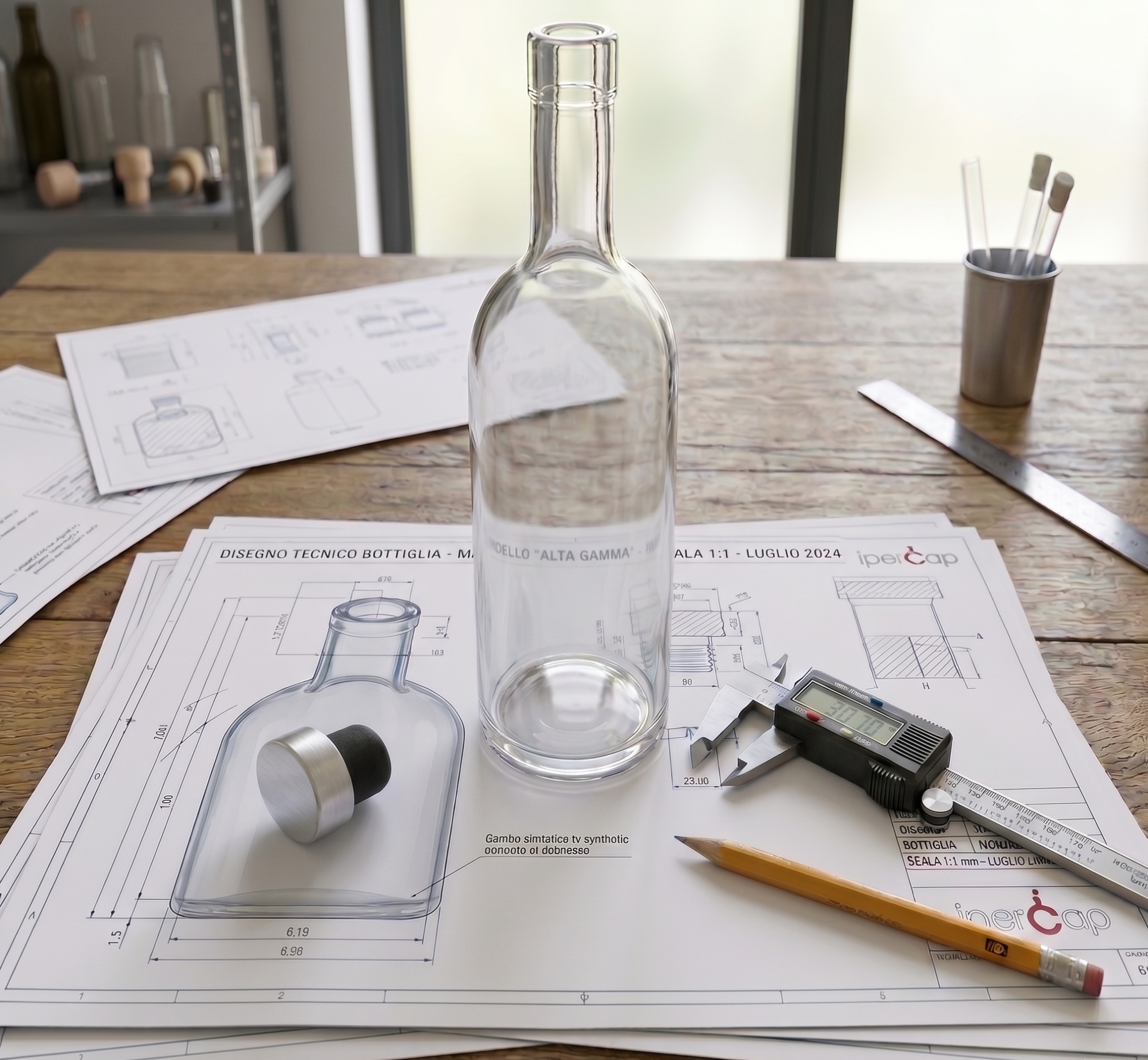
Every glass bottle is designed to hold the nominal quantity of liquid to a specific fill level (often indicated on the base of the bottle or in the technical data sheet in millimetres from the upper edge of the neck).
What happens if this level is exceeded? Filling the bottle beyond the specified level drastically reduces the volume of headspace. With little air volume available, inserting the cap generates a much higher instantaneous overpressure, which pushes the closure outwards.

B. Liquid temperature and thermal expansion
The temperature of the product at the time of bottling plays a crucial role:
Expansion of liquids: If the liquid is bottled whilst cold and subsequently stored or transported in warmer environments, it will expand, reducing the headspace and pushing the cork upwards.
Bottling spirits or liqueurs: A rise in temperature causes the volatile alcohol fraction to evaporate, increasing the vapour pressure in the headspace.
C. Compression of trapped air during corking
During the rapid insertion of the cork (whether manual or mechanical), the air in the headspace is compressed. If the stem immediately forms a complete seal without allowing the trapped air to escape before the final seat, the compressed air acts as a veritable pneumatic spring.
D. Elastic memory and oversizing of the stem
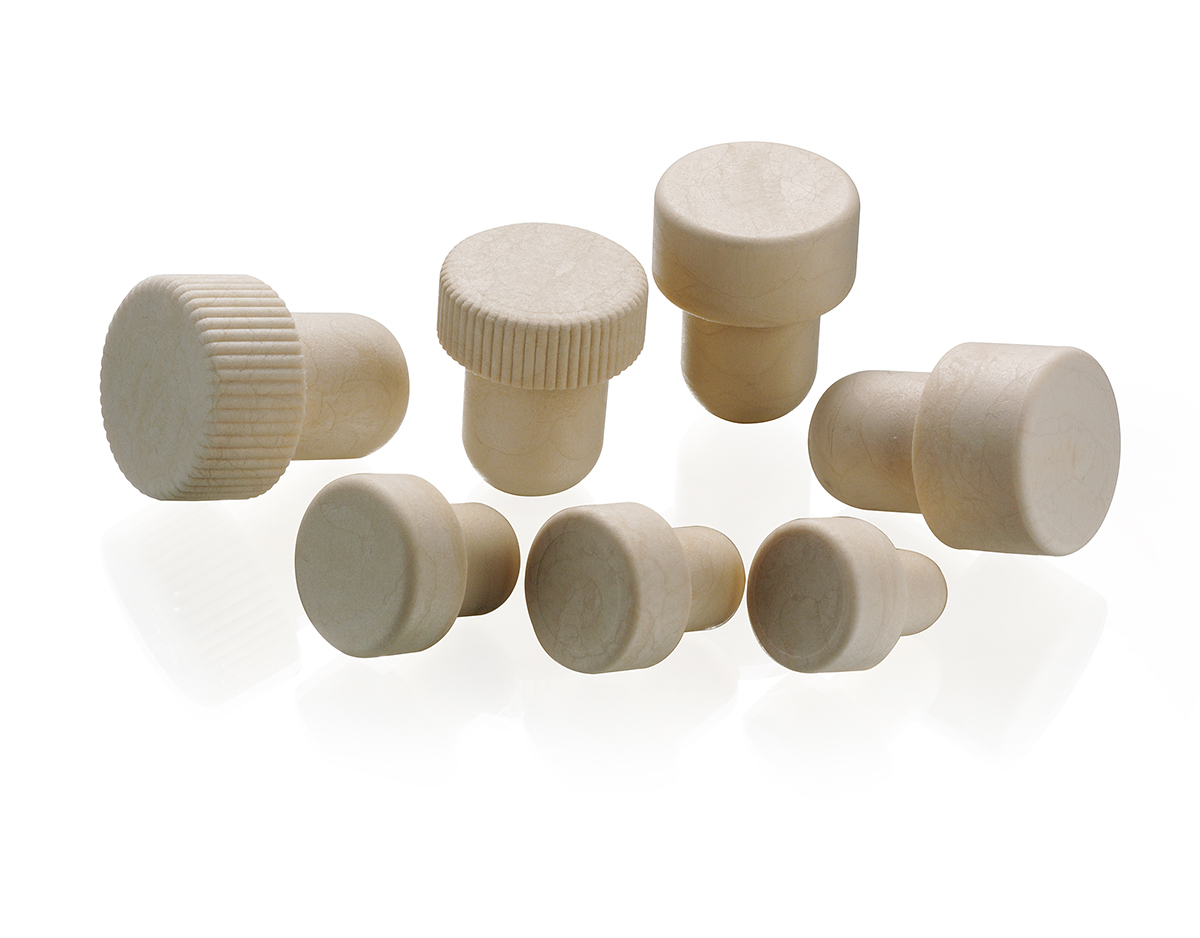
A stem diameter (whether made of natural cork, micro-agglomerated cork, synthetic cork or Syncork) that is excessively large in relation to the internal bore of the neck creates extremely high radial compression. The material’s reaction force tends to be discharged along the vertical axis, causing the cork to move slowly upwards.
Conversely, a stem diameter that is too small fails to create the necessary friction against the glass and may therefore cause the cork to rise.
2. How we prevent the pop-up effect at Ipercap
At Ipercap, we tackle the problem at its root with an engineering-based approach that takes into account all the variables of the bottling line:
Advice on line parameters: We help our customers to correctly calibrate filling levels and thermal conditions for bottling before commencing mass production.
Bottle neck custom calibration: We analyse the technical drawings of the glass and the fill levels to determine the ideal fit between the mouth and the neck, avoiding unnecessary oversizing.
Materials with controlled elasticity: We use new-generation synthetic compounds and micro-agglomerates that offer a balanced and uniform elastic recovery.
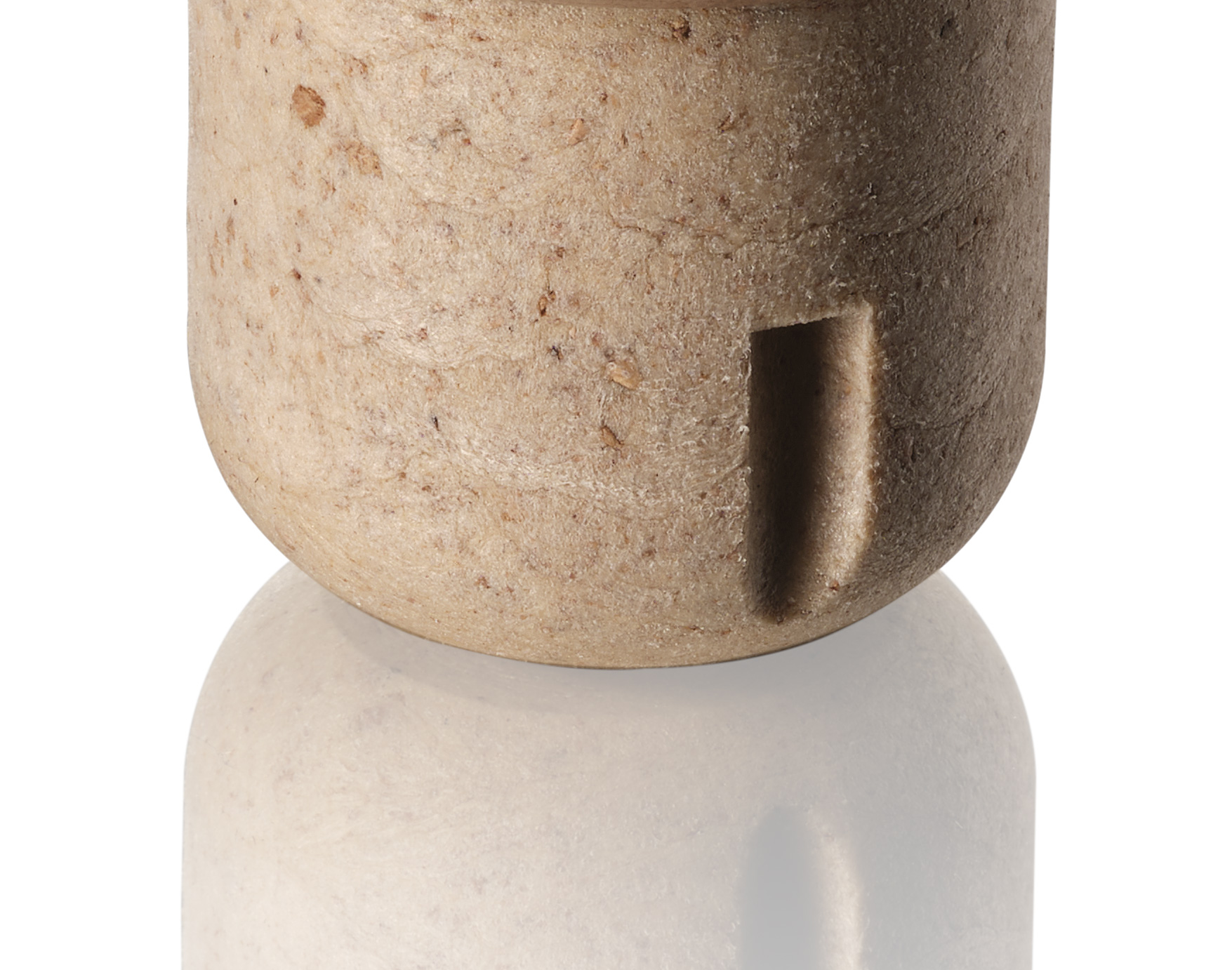
Decompression channels: To best manage the most complex cases, we offer synthetic stems fitted with a vent channel. The system facilitates the escape of air, reducing the internal pressure within the bottle neck and ensuring optimal ease of insertion.


Conclusion: Precision before production
Preventing the pop-up effect requires the right synergy between the choice of bottle, adherence to filling parameters and the design of the ideal closure.
Are you experiencing problems with corks rising or leaks on your production lines? Send us the technical specifications for your bottle or some samples: our technical laboratory will analyse the ideal combination and develop the perfect closure to meet your needs.
Request a free sample or a consultation at ipercap.com
This article is part of the Technical Lab series by Ipercap, dedicated to those who want to truly understand what goes into a quality closure.
📖 Have you read Vol. 1 — How to Choose the Right Size Cap for Your Bottle yet?